Curatorial projects & Artist as a manager
Gaming the System
International festival, Helsinki, Finland.2015
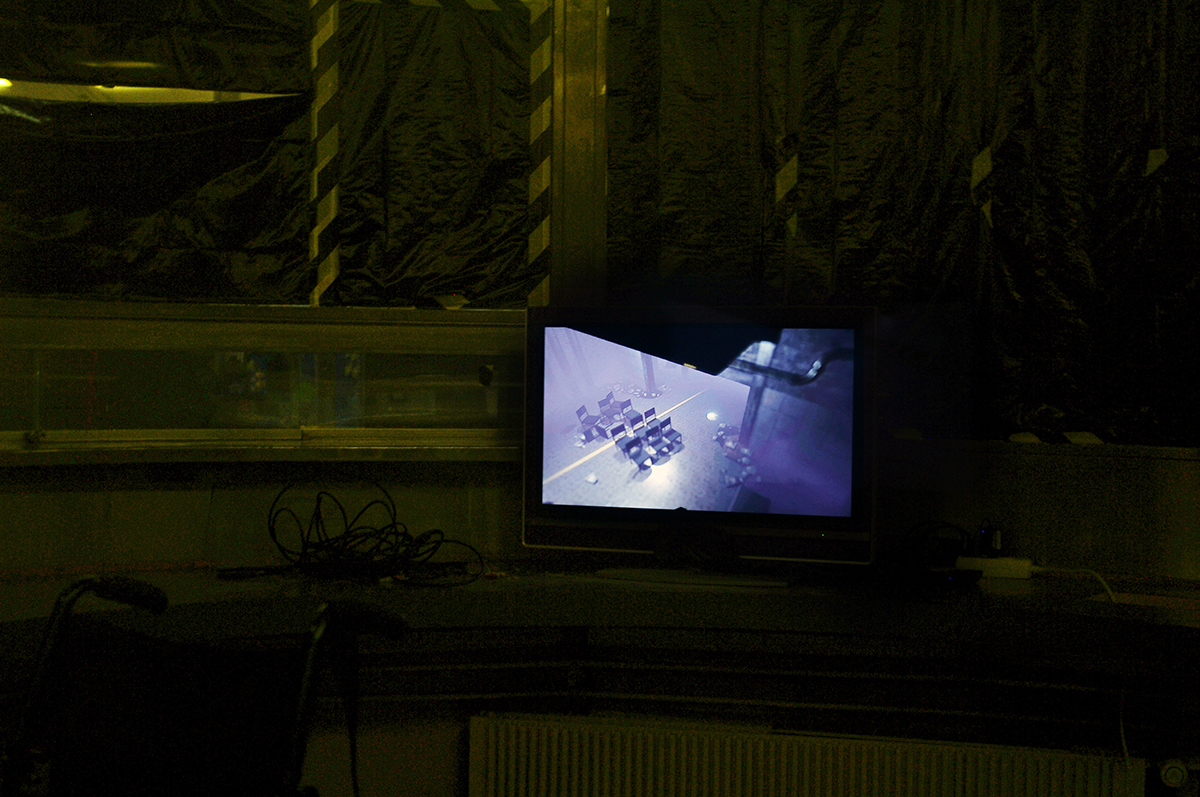 Last Worker Standing Machinima, Timo Bredenberg,
Video installation in the forem ticket sales booth in Hakaniemi metro station
Gaming the System examines an understanding of what might be axiomatic to games and art. Games are understood as structured play with formalist and systematic rules governing players. Play not as a definition of this axiom but understood as what is embodied through the identification of play may give us a way to game the system.
In cultural terms play is understood to pre-date culture itself, as “animals have not waited for humans to teach them their playing”, which has been stated by cultural theorist John Huizinga. With this in mind play is not exclusively human, but gaming and game design are both human activities. You need to play with ideas to reach something new since play pre-dates any new culture. Play is innate to many species, species whose ancestors existed before humanity ever systematized play as games.
We know play as we know ourselves. This understanding of play mirrors the way we recognize ourselves within larger systems. This self-recognition is an embodied way of pervading the systems and structures, which are seen through our behaviour and social norms. This is to say that inherent in the recognition of play is a gaming of the system, which functions as a reflexivity of complex systems.

An excerpt from the programme of events
Understanding the art works in Gaming the System as reflexivity, with regard to our lived environments and play is a cue to explore art as a gaming of the system. Through this project These Animals have invited artists who use the materials and contexts of daily life to perpetuate art works. Art that games the system might make us know ourselves anew in the culture we live beyond our current recognition.
These Animals is an artist group comprised of Pii Anttila, Anastasia Artemeva, Alan Bulfin, and Steve Maher, brought together through shared interest in creating an art happening in an urban place. The artist collective invited practitioners from Finland and abroad for the debut event in September 2015.
Our collaborators included taidelinja Aalto University School of Arts Design and Architecture
forumvirium and Pixelache festival.
https://theseanimals.wordpress.com/
Empathy as Resistance
2017A: For empathy to exists, does there need to be a certain degree of otherness, so you can say “I empathise with this person”? If, following for example a dictionary definition of empathy, one empathises - she is able to feel how the other person is feeling. So then does the other need to be removed enough, for the act of empathy to exists and to make sense? If they are too close to you, is there a need for empathy, does this term have weight? On the other hand, can one empathise with a virus or with a parasite, or is it too far removed? Is empathy a special effort you make for someone totally other, yet they are close enough that you understand what you are going through.
A: I think the problem in empathy often is that people think that they can know how the other is feeling. I mean at least I don’t think that I have the right to say that I feel what you are feeling, that I can be the one who defines the ability to empathise. The defining needs to come from the person who is being empathised with.
See more at https://pixelache.ac/posts/empathy-as-resistance-self-other-care-who
Empathy as Resistance is a discussion group that met during 2017 to focus on themes that are common within our process-based projects. During Pixelache Festival 2017 we held a special edition meeting, in a format of discussions, workshops and a community meal, open to all. The aim was to reflect on the questions raised during the discussions this year, and view them within the context of our practices. Here is a taster of our discussion. For our meetings we had been preparing questions that relate to the subjects of empathy as resistance. Some of these questions developed deeper, and some left open-ended.
Pixelache is an association of artists, cultural producers, thinkers and activists involved in the creation of cutting-edge cultural activities. Amongst our fields of interest are: experimental interaction and electronics, code-based art and culture, grassroot organising & networks, renewable energy production/use, participatory art, open-source cultures, bioarts and art-science culture, alternative economy cultures, politics and economics of media/technology, audiovisual culture, media literacy & ecology and engaging environmental issues.
The project was established by John Fail and Agniezska Pokrywka and produced by Anastasia Artemeva and Pixelache. Our collaborators in 2017 were Karolina Kucia, Waleed Rashwan, Shelley Etkin & Anniina Ala-Ruona (Garden of Others).
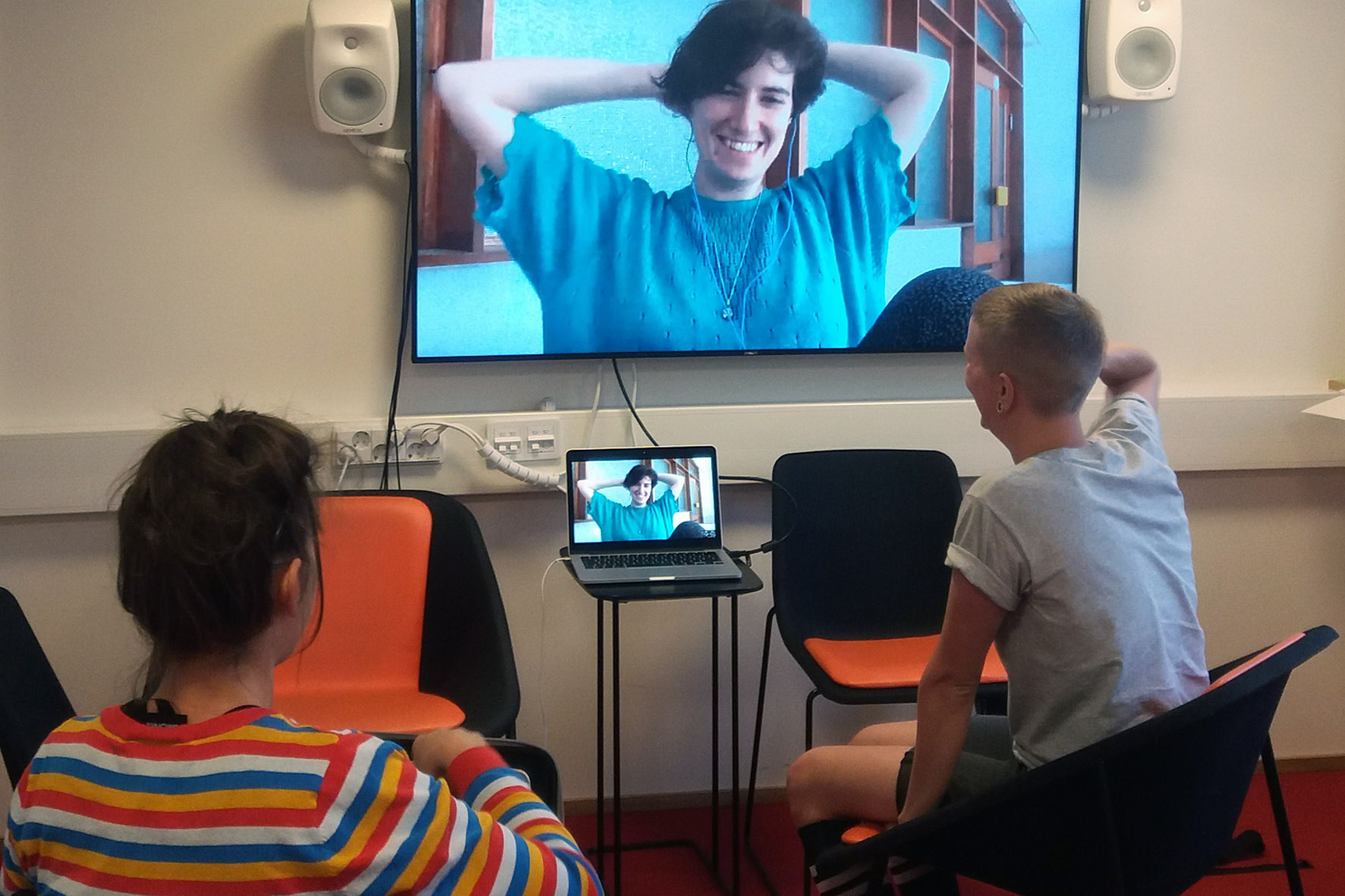
A: Who deserves empathy? What position are we in if we empathised with bad people? Does it make me a good person? For example the institution of prison divides, and we become a part of the machine. By empathising with the perpetrator we become part of the machine. So then should we empathise with the prison guards then as well? If we empathise with the inmates, their victims, what about the guards? The feeling of empathy does not mean that we agree with what people we empathise with do. Is empty something that we feel is not towards what the person and their deeds, but about specific experiences?
At Pixelache Festival 2017, Local and De-Centralised, the working group provided a five-hour long event, which featured three sections, to present individual projects and discuss relevant questions that they bring up in relation to Empathy as Resistance.
https://pixelache.ac/posts/empathy-as-resistance-who-we-are-pixelache-festival-2017
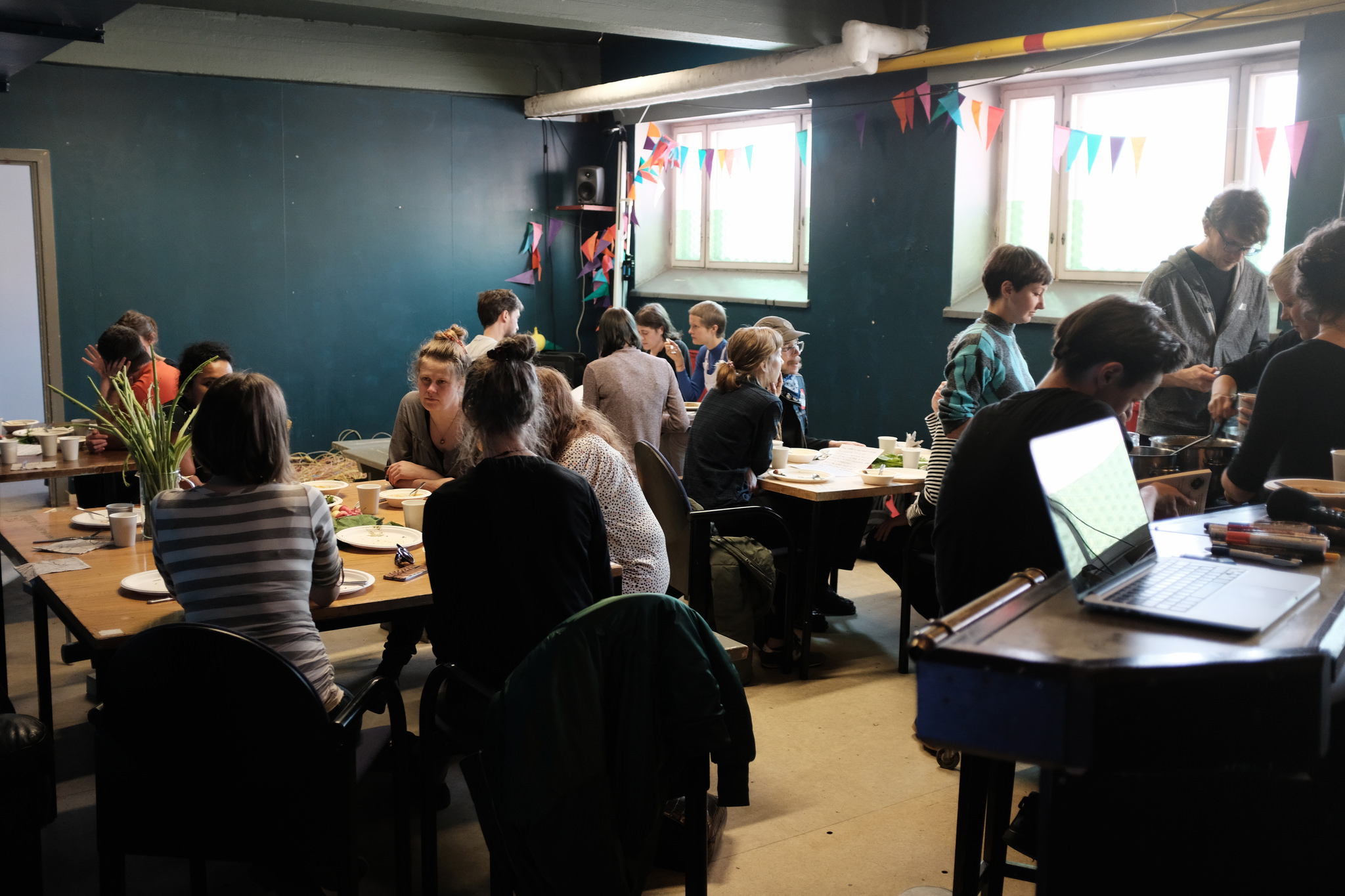

Anniina Ala-Ruona & Shelley Etkin:
Lunch as a Temporary Autonomous Zone
At Pixelache Festival, we served a lunch that was made from ingredients from the Garden of Others, a communal home garden in Kumpula, and a biodynamic farm in Sipoo. The remaining ingredients, which we could not source locally, we purchased. The lunch was offered for approximately 20 guests. The meal was served in three courses. The first course was massaged kale salad, with carrots, oil, and salt alongside gluten free and wheat bread with a wild pesto spread with wild-harvested herbs. The main course was caramelized pumpkin and root vegetable soup with coconut milk. The final course was dessert of zucchini bread with homemade rhubarb sauce, featuring a vegan and dairy option, both of which were gluten free. The meal was framed with the support of Hakim Bey and the Temporary Autonomous Zone, which was also forming and effecting our work in the squatted Garden of Others. At each of the tables, where guests were seated, had a written quote from Temporary Autonomous Zone, dealing with dinner parties, food, politics, collective gatherings, and revolution. These were offered as food for thought and prompts for discussion. While serving the food, we invited guests to bring attention to how the food was impacting their ways of thinking, speaking, and being. The overall atmosphere of the meal was pleasurable, though the space was quite ragged (or rough) and everybody left with a full belly. There was some movement of the guests between the seats and tables throughout the event. The focus was on the food and coming together through sharing a meal, keeping it simple, and it created a lively and intriguing happening.

Karolina Kucia:
At Pixelache Festival, I presented part of the research material for the project I am doing together with Tero Nauha. It is a fiction film we are working on in Andalucia in Spain. I have presented our collaborators from there -- the workers from the Almeria region, who are part of a workers union called soc-sat. It is formed by the workers union merged with the field workers union. They work in the plasticulture, which produces a large amount of vegetables for the European market. This kind of farming began in the 1970s and has been called, in that region, the Almeria miracle, bringing one of the poorest regions of Spain into the economic race. This model of farming has spread into Egypt, Jordan, Morocco, Tunisia, New Zealand, and South Korea, among other countries. There are three factors ensuring the continuity of vegetable production in this region. First is the highest amount of photosynthesis, due to the highest amount of sunny days in Europe. Another factor is enough cooling winds to ensure continuous workflow in the fields. And the cheap labor force, mostly from North Africa and Sub-Saharan region, Eastern Europe, and South America. The workers union, due to their history in Spain after the reign of Franco. One of the most famous stories that this soc-sat has been involved in, was the communist village Marina Leda, which continues to this day. I showed some video material (embedded) featuring an interview with Spitou Mendy, who is the spokesman for the union, clarifying the situation of the workers in that area. I present this case in relation to Empathy as Resistance, to draw from the old strategy of unionizing, as a strategy of collective refusal, the refusal of being disconnected. This treats ‘Responsibility’ as the ability to respond, as something that happens in process, starting from the sense of not being able to respond, by making, unmaking, and recognizing the ability to respond as a shared process among various agents.

Anastasia Artemeva:
At Pixelache Festival, I had a visual presentation of my ongoing project called Prison Outside. I presented processes and challenges that I faced particularly working with institutions. These institutions include NGOs, state-run correctional facilities, and art institutions as well as funding bodies. I spoke about different roles I have experienced taking on as an artist during the production of socially-engaged projects based around the subject of imprisonment and presented in collaboration with men and women recently released from prison or who are on probation. These roles were: listener, representative or one who represents, collaborator, and judge. Following this, there was an open discussion amongst all those present through the presentations, about different methodologies that are employed in my projects. These vary from a collectively designed artwork such as a play to open hands-on craft workshops. The direction and approach to engagement of the collaboration depended on each group gathered and the institution involved. I like to look at the institution as another member of the collaboration and navigate accordingly. Working with an undefined position of art within the project creates resistance to the question of who defines what the project is as well as who defines its artistic value.
Cover Image & group photo: Anastasia Artemeva
Festival photography: Antti Ahonen
Meeting in the Middle
2016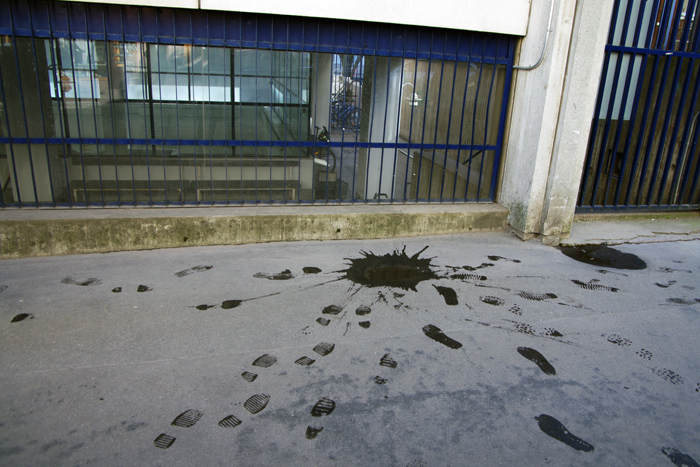
Are you an artist who wants to cooperate with the public sector?
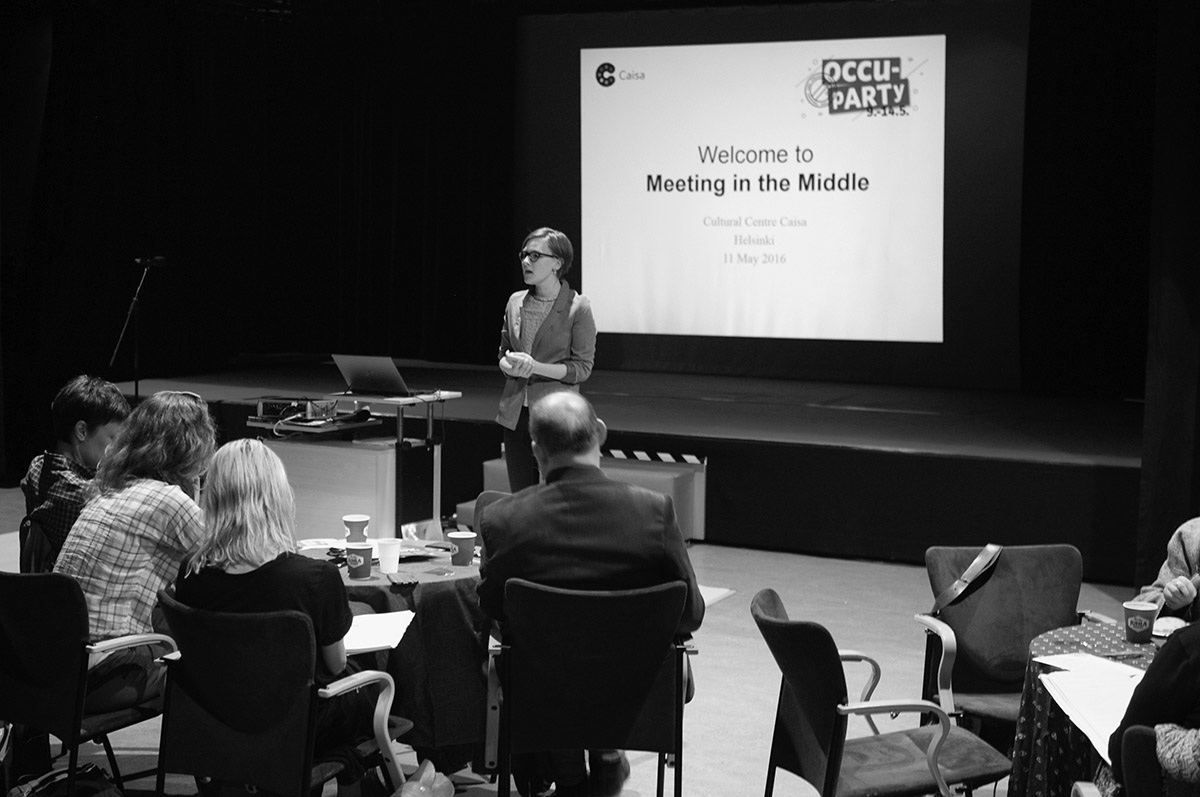
Meeting in the Middle is a professional forum on artistic collaborations with communities outside of art field.
As the definition of art is expanding, new forms of creative practices have developed to include artistic research, interaction with communities and multidisciplinary dialogue. Collaborations between public institutions and creative practitioners, be it in a form of a socially-engaged projects, artwork commissions, the use of public space or social research, have established a solid presence by now. However, an opportunity to carry out a first-hand research, plan and gain insight from a professional experienced in the field is sometimes unavailable, often simply for the lack of time and contact between the artist and the group of interest. Often artists find themselves planning a public project without engaging with the audience or collaborators, relying purely on theoretical research.
Meeting in the Middle is a professional forum for artists and non-artists who want to collaborate on production of creative projects. The intention of the event is to open up the discourse on public art beyond artistic circles and encourage cooperation between artists and professionals of other fields. A broad range of activities, from planning a community art workshop to presenting a completed artistic work in a waiting room is encouraged. Together we will discuss projects, listen to each other’s ideas and address the desires of particular audiences and specifics of public places. After the networking session, a series of talks, addressing such information as funding, employment and commissioned work will take place. The specific focus of the day is on the role of interculturalism and multilingual collaborations and working relationship between international artists and Finnish public sector. Our intention is to provide possibilities to meet professionals from schools, kindergartens, libraries, hospitals, prisons, refuge centres and multicultural centres, tax office and social insurance institution.
If you are looking for a collaborator, please get in touch via anastasia.artemeva(at)outlook.com and we will connect you with interested professionals.
TomCat Festival
Limerick, Ireland2013
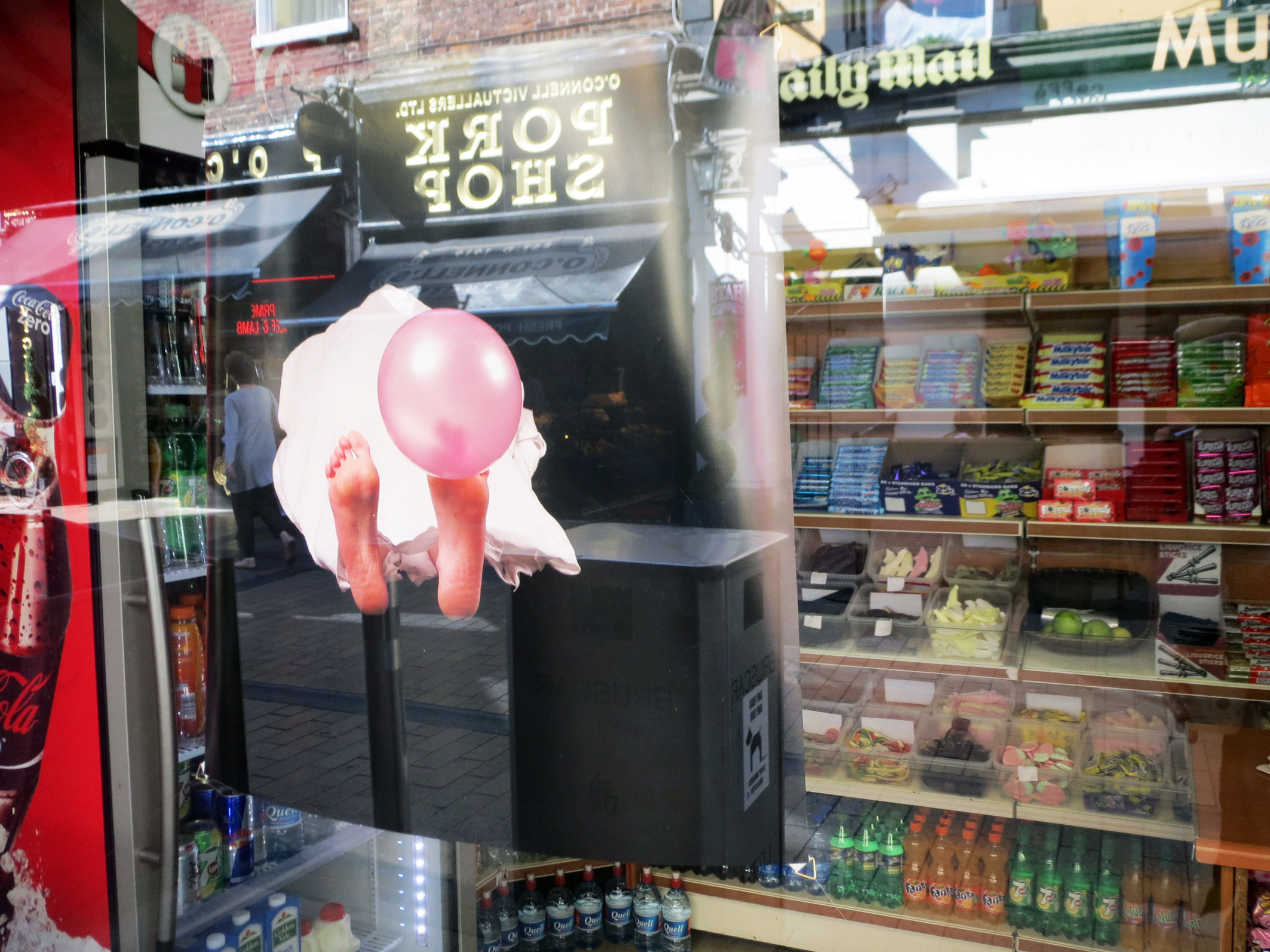
A multidisciplinary street festival facilitated collaboration of business owners, publicans and local artists of Catherine and Thomas streets, the centre of Limerick city in Ireland. A continuation from a very successful project by Spirit Store, a collective managed by Paul Tarpey and Marilyn Lennon, the format of the festival varies from year to year, always focusing on contributions from local trades, especially family-run business like pubs, butchers', piano shop and a cobblers', to name a few.
Co-curated with Steve Maher and Gimena Blanco.
Please read more about TomCat here
Breda Lynch, Soul Survivor, digital print, Mulhany’s Newsagent